
01
Takes the description, not a verdict
What the homeowner can see from the ground, which elevation, whether water is inside — captured in their own words, with no view offered on what has failed.
What lands after a gale is always the same handful of words: think I've got a leak, slates on the drive, water coming through the landing ceiling. Adoomi asks what your office would, in the chat window on your own website — the postcode, checked against the roofing area your site lists, what the covering looks like from the ground, which elevation, whether water is actually inside, and how a scaffold or tower reaches the back. It names no cause and puts no figure on a roof nobody has stood on.
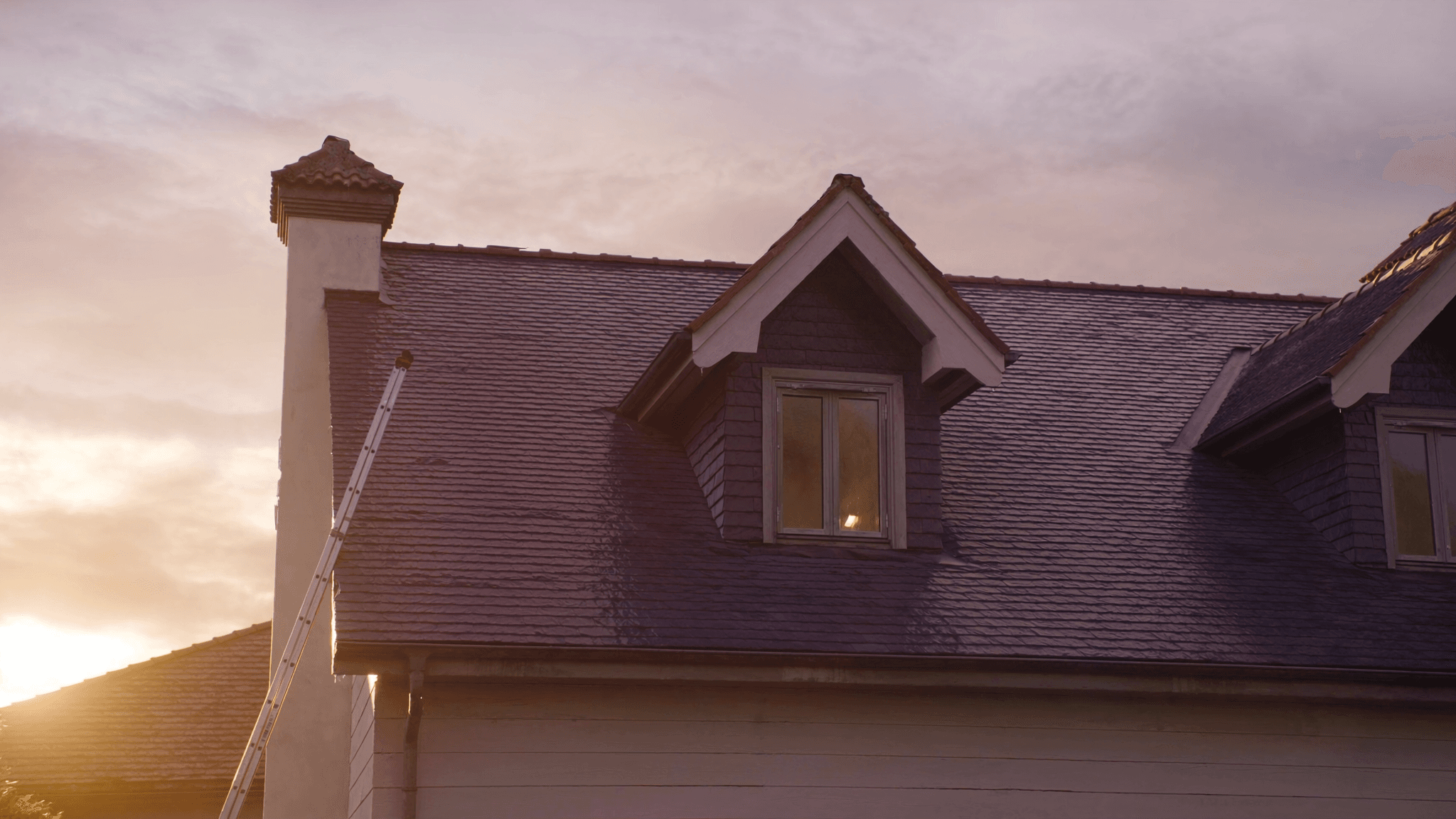 Fig. 01.A · Roofers
 Fig. 02.A · pain quotes
None of those messages carries the three things that decide the job: where the property is, what the roof is covered with, and how the rear is reached. So every one of them costs a call-back just to become useful, and while that call-back is waiting the homeowner has already rung the next firm. Worse, the enquiry that matters — water running down a bedroom wall at midnight — sits in the same inbox as a question about moss on a north-facing slope, waiting exactly as long.
What the homeowner can see from the ground, which elevation, whether water is inside — captured in their own words, with no view offered on what has failed.
Side-gate width, a shared alley, kerbside parking, tower or full scaffold — the access facts that move a roofing price, gathered before anyone drives out.
Roof or chimney down, slates falling where people walk, water running through a ceiling: your published wording is repeated and the on-call roofer gets the message.
How far you travel, which coverings you work on, whether you handle insurance work, how an inspection is arranged, whether gutters and fascias come with the job — answered off the roofing pages you already keep current, with the cause and the figure deliberately left to someone on the roof.
The first question sorts the queue: is water coming in, or is the damage only outside. Then Adoomi asks what the homeowner can see from the ground — slate, plain or interlocking tile, a ridge, a valley, felt or rubber on a flat roof — which elevation, and whether anything has come down. Then access: side-gate width, a shared alley, kerbside parking, tower or scaffold. Photographs cannot enter the chat window; once a homeowner is handed to WhatsApp they can send pictures to your team there.
 With Adoomi
 Fig. 06.A · after-hours
Storm damage is reported when it happens, not when you open. Overnight your published answers give themselves — how far you go, which coverings you work on, whether you take insurance work — the rest is captured. No inspection time is offered, storm week especially. Where a message describes real danger, Adoomi repeats your own storm-page wording, including calling 999, then hands over: the on-call roofer picks the homeowner up on WhatsApp, and an email alert lands where you set it.
Storm week or quiet week, the same questions come round: do you come out this far, do you do flat roofs as well as slate, do you work with insurers, do you do the gutters and fascias at the same time. All of it is already written on your site, so nobody comes down a ladder to repeat it. What is left needs someone on the ridge — reading the valley, checking the flashing and the flaunching, deciding between a tower and a scaffold, and pricing the work in front of it.
 Fig. 08.A · controls
A stain on a landing ceiling can be a slipped slate, cracked flaunching, a blocked valley or a failed lap on flat felt, and only access settles which. So Adoomi captures what the homeowner sees and offers no verdict. It prices nothing and offers no inspection time. NFRC, TrustMark and CompetentRoofer appear only when the registration is yours and you enable it; none of this makes a roofing business compliant. Messages are EU-hosted, deletable under GDPR, and no content is logged.
Coverage, coverings, inspection arrangements and insurance process come from pages you approved. Where they say nothing, the assistant says so rather than filling the gap.
A stain, a wet patch or slates on the drive is captured as described. What has actually failed is settled on the roof, never in a chat window.
Repairs and re-roofs are priced by whoever has seen the covering and the access. Inspection times stay your team's to give, storm week included.
Roof or chimney down, slates falling where people walk, someone hurt: your own published wording is repeated, including calling 999, and the on-call roofer gets it.
NFRC, TrustMark and CompetentRoofer are named only when you turn them on. No membership or warranty is claimed for you, and none of this makes a business compliant.
Cause is never named. A stain on a landing ceiling can be a slipped slate, cracked flaunching, a blocked valley or a failed flat-roof lap, and only access settles which. The assistant captures what the homeowner can see and hands the enquiry to a roofer.
Prices are never given for a roof nobody has stood on. Your own pages supply what may be said about the work you take on and how inspections are arranged; beyond that the assistant captures the covering, the elevation, the access and the postcode, and leaves the figure to your team.
Photos cannot be sent into the chat window at all. Once the conversation is handed to WhatsApp, the homeowner can send pictures to your team there — so they reach a roofer rather than the assistant, and nothing is judged from them.
Danger stops the conversation. Where a message describes part of a roof or a chimney down, slates falling where people walk or someone hurt, the assistant repeats your own storm-page wording — including calling 999 — then hands over on WhatsApp and emails the address you set.
Registrations are named only where you hold them and turn them on yourself. No membership, warranty or insurance-backed cover is asserted on your behalf, and none of this makes a roofing business compliant with anything. You approve every answer before go-live.
The Free plan carries 50 message credits at £0 a month; above it, £8 buys 200, £20 buys 500 and £75 buys 4,000. Pointing it at your roofing pages, reading what it drafts and dropping one line into your site comes to ~10 min, and nothing reaches a homeowner unreviewed.
No forecast of storm-week volume belongs here — your rates, your patch and the night the wind gets up settle that. What holds is structural. Adoomi answers only from roofing pages you approved, so a covering you do not work on gets an honest no. It cannot name a cause, quote a figure or offer a slot. It re-reads those pages on a schedule and after any edit, so an area you changed after the autumn gales is what answers in winter. It runs 24/7, in the language the message arrived in.
Coverage, roof-type and insurance-process questions are answered from your own pages overnight as readily as in the middle of the afternoon.
What failed and what it costs are settled by someone with access to the roof. The assistant captures the detail and hands it on rather than guessing.
Conversation data is stored in the EU and comes out or is deleted on request under GDPR, and message content is never written to logs.
From the guides library
Point Adoomi at the pages describing the area you travel to, the coverings you work on, how you arrange an inspection and what your storm guidance says. Name the roofer who takes a water-through-the-ceiling handover on WhatsApp overnight, and the address the email alerts reach. Then type your worst storm-night message into it yourself, before a homeowner does. Connecting the site, checking the answers and adding one line runs ~10 min, and the Free plan is £0 a month with 50 message credits.
 Fig. 12.A · Roofers
