
01
Clears the questions your desk repeats
Opening hours, where you stand on NHS and private, published check-up and hygienist fees, registration, what a first visit involves and how you handle emergency requests.
Adoomi answers the questions that bring patients to your site: whether you take NHS or private, what a check-up or hygienist visit costs, how to register, and how your emergency slots work. It works 24/7 in the patient's own language, so reception can finish with the person in front of it. Clinical questions, including how soon someone should be seen, go to the clinician you name, in the patient's own words.
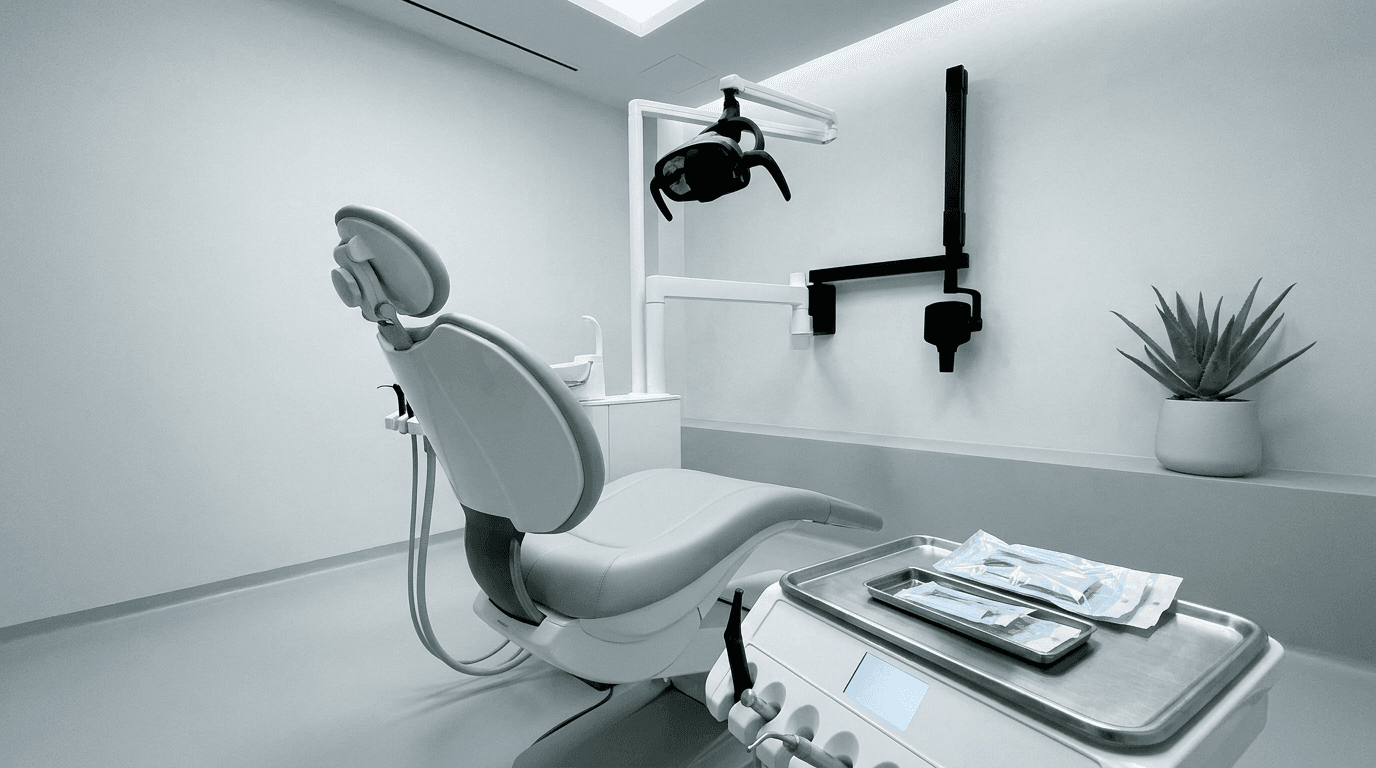 Fig. 01.A · Dental practices
 Fig. 02.A · pain quotes
The dental version of that list arrives all week: are you taking NHS patients, how much is a check-up and a scale and polish, can you see my child, do you keep emergency appointments, is there parking. They land while reception is settling a bill, chasing a lab case and buzzing someone in. The ones typed on a Sunday evening get nothing back until Monday, by which time that patient has registered with a practice that replied.
Opening hours, where you stand on NHS and private, published check-up and hygienist fees, registration, what a first visit involves and how you handle emergency requests.
NHS or private, new or existing patient, what the visit is for in the patient's words, workable days and the best number — captured for reception, because the assistant holds no appointment book.
Pain, swelling, a lost crown, medication, an X-ray or a plan that is priced at a consultation — each stops the assistant, surfaces your published emergency wording and reaches the person you named.
These are the questions a dental desk answers between patients. Each already has an answer somewhere on your website, and the assistant repeats it at whatever hour it is asked. Anything that turns on a tooth — pain, a break, a plan that needs pricing — never gets an answer here, only a handover.
A dental enquiry is workable when it says who is asking and what for. Adoomi takes the desk-level detail your team asks anyway: NHS or private, new patient or already with you, whether it is a check-up, a hygienist appointment, something cosmetic or an emergency request, which days work and the best number. It never asks a patient to describe pain or point at a tooth to earn an appointment — that conversation belongs to a clinician, and reception can close the rest in one call.
 With Adoomi
 Fig. 06.A · after-hours
Dental enquiries cluster where the practice is not: Sunday evening, the bank-holiday weekend, the hour after work. Adoomi keeps answering the published desk list then — hours, where you stand on NHS and private, fees as your page states them, registration, what a first visit involves. A message about a tooth gets no judgement at all. It shows what your own emergency page carries — the practice number, 111 when you are closed, 999 in an emergency — and flags it for the person you named.
Every line of the dental desk list is on your website already — hours, the NHS and private mix, published fees, registration. Answering from there stops reception repeating itself between patients. The rest is what always needed a person: the appointment that must move around a lab date, the nervous patient who wants talking through, the tooth that was never the assistant's. Each lands as an email alert to the person you chose, or moves into WhatsApp in the patient's own wording.
 Fig. 08.A · controls
Adoomi stops at the surgery door, answering only from pages you approved: hours, NHS and private, fees. It will not read a symptom or an X-ray, name a cause of pain, suggest a painkiller or antibiotic, price a plan set at consultation, or say how soon to be seen. Each stops it and emails the clinician you name. Child and safeguarding enquiries go to one named person, not reception. Chats are EU-hosted, GDPR-erasable, and logs hold no message content. None of it is compliance.
Hours, the NHS and private position, published fees, registration and policies come from content you approved. A question they do not settle gets a handover instead of a guess.
No reading of pain, swelling or bleeding, no cause named, no painkiller or antibiotic suggested, no X-ray interpreted, no view on how soon anyone should be seen.
Aligners, implants and large restorations are quoted at a consultation, so the assistant gives no figure at all — it says where the price is set and captures the enquiry.
For anything urgent it repeats what your emergency page publishes — the practice line, 111 when you are closed, 999 in an emergency — and flags the message to a named clinician.
Child and safeguarding-adjacent enquiries reach one named person, not the reception inbox. Chats are stored in the EU, are erasable under GDPR, and put no message content into logs.
Anything about a tooth is a handover. The assistant does not read pain, name a cause, comment on swelling or bleeding, suggest a painkiller or antibiotic, or say how soon anyone should be seen. It shows the emergency wording your own page carries and passes the message to the clinician you named.
Published fees are repeated exactly as your fee page words them — check-up, hygienist visit, examination. Treatment planned around one mouth, such as aligners, implants or a large restoration, carries no figure here: the assistant says the price is set at a consultation and captures the enquiry.
Your NHS-and-private page is the only source for that, and the assistant repeats what it says, waiting list included if that is how you have worded it. Where the page has gone out of date it will still answer from it, which is why keeping that one page current does most of the work.
Enquiries involving a child, or anything safeguarding-adjacent, reach the one person you nominate, not the reception inbox the whole practice can open. The assistant handles none of it itself: it captures what was written, hands it over and says a person will be in touch.
Dental records are the sensitive part of your world, and the chat is handled the same way. Conversations sit on EU-hosted infrastructure, can be exported or deleted on request under GDPR, and their content never reaches logs. The chat window sets no tracking cookies, and none of it is compliance sign-off.
Message credits set the price: £0 a month covers 50 of them, then £8 for 200, £20 for 500 and £75 for 4,000. One credit is one AI answer, so the reply that declines a tooth question and hands it on still spends one. Connecting the site, reading the answers and adding one line takes ~10 min.
A dental assistant is worth judging on what it structurally cannot do, not on a number in a case study. This one answers from nothing except pages you approved. It cannot put a figure on aligners or an implant, because that is decided at a consultation with a mouth in front of the dentist. It cannot form a view on a tooth. What it can do runs at every hour, in the patient's language: the NHS and private position, published fees, registration, first visits, emergency-request policy.
NHS position, published fees, registration and first-visit questions are answered from your own pages whenever they are asked, in the patient's language.
Aligners, implants and large restorations get no figure from the assistant — it says the price is set at a consultation and takes the enquiry instead.
Pain, swelling, medication and X-rays are never answered. Each one surfaces your published emergency wording and reaches the clinician you named.
From the guides library
What it answers from your own published pages, what it hands straight to a clinician, and where a person at the desk still wins. Written for practice managers in the UK and Australia, not for vendors.
Read the guideA dental answering service is anything that answers patients while the desk is busy or closed. That covers human call answering, an AI voice on the line, a virtual receptionist, or a written assistant on the practice's website. Here is what each covers, and what each costs.
Read the guideConnect your fees, NHS-and-private, registration and emergency pages, say who fields anything clinical and who takes a child or safeguarding enquiry, then type "how much are aligners and my tooth is throbbing" into it yourself. A patient sees none of it until you have read it and agreed to it. Connecting the site, reading the answers and dropping one line into your page comes to ~10 min; the Free plan gives you 50 message credits at £0 a month while you decide.
 Fig. 12.A · Dental practices
