
01
Answers the menu question the moment it is asked
Hours, the last booking of the night, dietary tags, corkage and walk-in policy — answered from your own pages while the host stand is on the floor.
AI for restaurants answers what a diner asks mid-service, from the pages you already publish — the last booking of the night, the wine list, which dishes carry a dietary tag. It captures the reservation enquiry with covers, the sitting and any dietary note attached, at any hour and in the guest's own language. Confirming a table stays with whoever holds the book, and an allergen question goes straight to your kitchen.
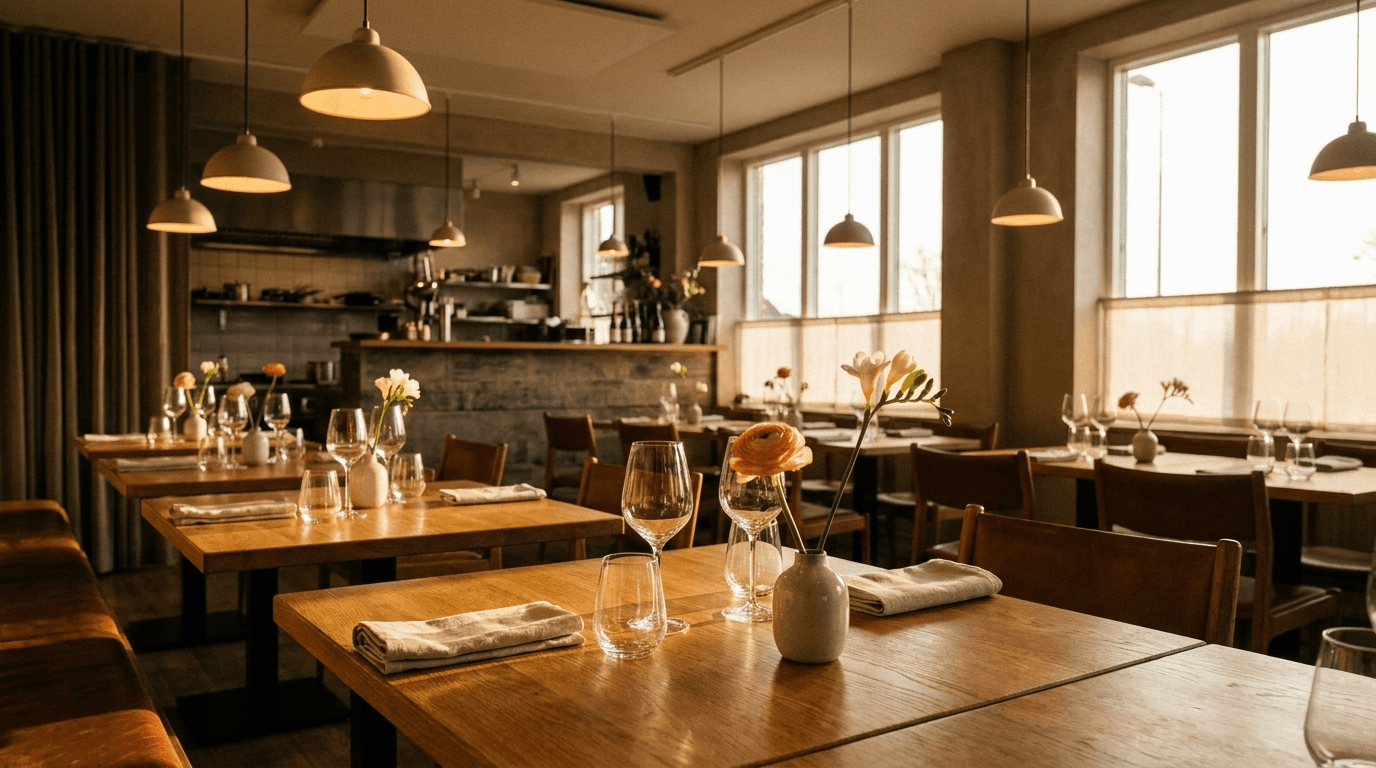 Fig. 01.A · Restaurants
 Fig. 02.A · pain quotes
The messages that decide a Saturday come in during Friday's service. A couple wants the last booking of the night; a table of eight wants to know whether you can seat them; somebody asks whether the risotto is gluten-free before choosing between you and the place two doors down. The host stand is on the floor, the chef is on the pass, and by the time anyone types a reply the guest has booked elsewhere. Nothing was wrong with the answer — it was on your menu page. It just arrived late.
Hours, the last booking of the night, dietary tags, corkage and walk-in policy — answered from your own pages while the host stand is on the floor.
Covers, date and time, the occasion and any dietary note, captured in one pass and passed to whoever holds the book. The assistant confirms no table itself.
A guest asking whether a dish is safe gets your published tags, the page they came from, and their question forwarded to the kitchen — never a yes.
Opening hours and the last booking of the night, the dinner and wine menus, which dishes carry a vegan or gluten-free tag, high chairs and the children's menu, walk-ins, private dining — each answered from the page you publish it on. Allergen confirmation, a party bigger than your largest table and a private-hire brief leave the chat window for the person you named.
'Anything Saturday?' is not a reservation. Adoomi asks what your host would ask anyway — how many covers, what time, whether it is a birthday or an anniversary, whether anyone has a dietary requirement — and the enquiry lands with all of it, in the guest's own words. Private dining and large parties are captured against the fields your events lead needs instead. What a guest types is EU-hosted, exportable or deletable on request under GDPR, and no conversation content is written into logs.
 With Adoomi
 Fig. 06.A · after-hours
Reservation messages cluster in the hours after your kitchen closes and before it opens: someone deciding between two restaurants on a Wednesday night, a parent checking the children's menu before Sunday lunch, a group hunting a late table when the theatre comes out. Adoomi answers those from your published hours and menu pages 24/7, in the language the guest writes in, and captures the rest — so the morning starts with a list your reservations team can work through rather than an unread inbox.
Dietary tags, corkage, whether the set menu runs on a Saturday, whether you take walk-ins, where to park for a pre-theatre table — every one of those is on a page you already publish, and every one of them currently interrupts somebody mid-shift. Adoomi answers them from those pages. What still reaches a person is what needs one: the allergen check only your kitchen can settle, the party larger than your biggest table, the private-hire brief, the complaint about last night.
 Fig. 08.A · controls
Your menu tags are the whole of what it may say about a dish. It reads them back, shows the page they came from, and hands the real question to the pass — only the kitchen knows what went onto tonight's plate, so tonight's plate is the kitchen's answer to give. No table is confirmed either: reservation enquiries are captured and go to whoever takes bookings today. Licensing and age policy get an answer only where you wrote one. None of this makes your restaurant compliant with anything.
The assistant draws on the pages you approved. Where they do not settle a question, it says so instead of reaching for what a restaurant usually does.
It can repeat a published tag and forward a question. Declaring a dish safe for an allergy is not something it is able to do, whichever way a guest asks.
It holds no diary and quotes nothing for private hire. Reservation and event enquiries are captured and passed to the person who prices and confirms them.
Read every answer it proposes, edit the ones that do not sound like your room, and block anything you would rather it never said. Nothing changes without you.
The kitchen answers that one, not the chat window. The assistant will say which dishes your menu tags as nut-free and show the page that says so, then send the question through to the pass in the guest's exact wording. No dish is ever declared safe in chat.
Bookings are captured, never confirmed. The assistant holds no diary and cannot see your table plan, so it takes covers, date and time, the occasion and any dietary note, then passes the enquiry to whoever runs the book — your inbox, your WhatsApp, or the book on the host stand.
Your own pages are the source. The site is re-read on a schedule and whenever a page changes, so an updated wine list or set menu follows within that cycle. Anything that exists only on the kitchen printout, tonight's specials included, is not something it will state.
Private hire leaves the chat window. The assistant captures the date, the numbers, the occasion and a contact, quotes no price and holds no room, then routes the enquiry to your events lead by email alert or a WhatsApp handoff carrying the guest's original message.
Complaints get no reply from the assistant. A guest raising a problem with a meal or a bill is routed straight to your manager, with what they wrote carried across, so nobody has to retell it. No refund, discount or apology is offered on your behalf.
Pricing starts at £0 a month: the Free plan carries 50 message credits, and paid tiers step up to 200 at £8, 500 at £20 and 4,000 at £75. Credits are spent by the assistant's answers, never by your team's replies. Connecting, reading and adding one line runs to ~10 min.
AI for restaurants is worth more for being narrow. The table plan and the diary stay on the host stand, so Friday's real position comes from the person holding them. Adoomi answers from the menu, hours and policy pages you approved, hands the allergen question to your kitchen with the guest's own wording attached, and passes the reservation enquiry to whoever confirms tables today. No outcome is claimed here: what is described is how the assistant is built to behave.
The last booking of the night, dietary tags, corkage and walk-in policy — answered while the floor is full and after the kitchen closes.
The assistant repeats published tags and forwards the question to your kitchen. No wording from a guest unlocks an assurance it does not have.
Enough to put a weekend of real reservation and menu questions through it before you decide. Setup runs to ~10 min.
From the guides library
Connect the pages a diner reads before choosing — menu, wine list, opening hours, private dining, the set menu — then read the answers it proposes and change any you would not give across the pass. Reservation enquiries go to the inbox or WhatsApp number you name; allergen checks go to your kitchen. Starting costs nothing: £0 a month, 50 message credits, no card. The pricing page lays the plans side by side, and the guardrails and handoff page walks a decline through end to end.
 Fig. 12.A · Restaurants
